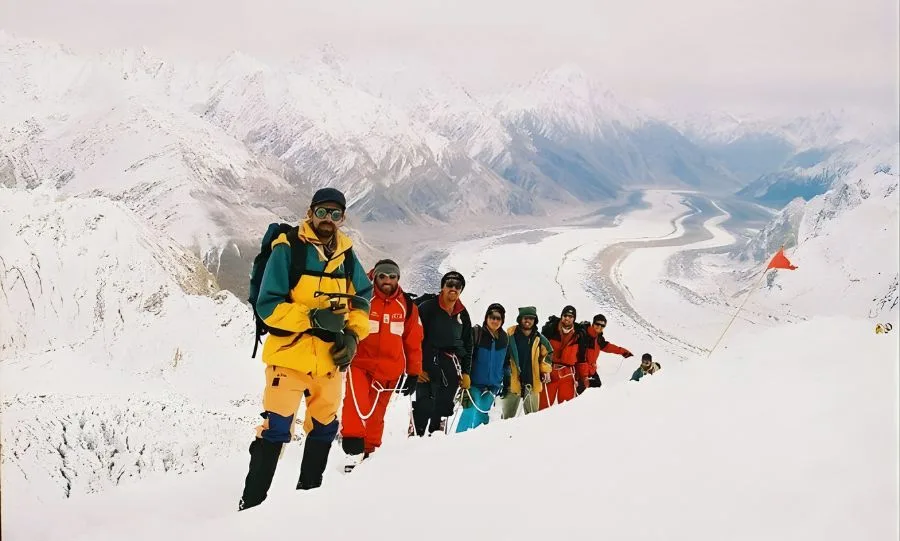
14-Day Chapursan Valley & Chilinji Pass Trek (5,247m), Pakistan

Chapursan Valley
Min Age : 18
Max People : 20

14-Day Chapursan Valley & Chilinji Pass Trek (5,247m), Pakistan

0

Detail

Duration: 14 Days
Trekking Days: 7 Days (Moderately Strenuous)
Maximum Elevation: 5,247 meters (Chilinji Pass)
Accommodation: 7 Nights Camping | 6 Nights Hotels

The Chilinji Pass Trek is one of Pakistan’s most remote and breathtaking trekking routes. This 14-day expedition takes you from the Ishkoman Valley near Gilgit to the Chapursan Valley in Upper Hunza, descending through one of the least-explored regions of the Karakoram.

The trek offers a spectacular journey through richly contrasting landscapes — from high mountain meadows and rugged peaks to the expansive valleys along the Wakhan Corridor, near the borders of Afghanistan and Tajikistan. Along the way, you will encounter local nomads who still follow centuries-old trade routes, bringing their yaks, sheep, and goats to Chapursan Valley to exchange goods like sugar, tea, and cigarettes.

This expedition combines remote trekking, alpine camping, and cultural discovery. With 7 nights in tents and 6 nights in hotels, trekkers experience both the wilderness of the Karakoram and the hospitality of the local communities.

Highlights:

  • Trek through the remote Chapursan Valley

  • Cross the Chilinji Pass (5,247m), one of Pakistan’s newly opened trekking routes

  • Stunning views of the Karakoram mountain ranges

  • Witness traditional nomadic lifestyle and trade routes

  • Camping under the stars in pristine alpine landscapes

  • Explore the hidden corners of Upper Hunza and Ishkoman Valley

Itinerary

Day 01Arrive in Islamabad

Arrive at Islamabad International Airport. Spend the day preparing for the trek, finalizing permits, and making trekking arrangements. In the evening, explore the twin cities of Islamabad and Rawalpindi. Overnight at the hotel.

Day 02 Islamabad – Chilas/Narran

After breakfast, drive along the Karakoram Highway (KKH), a legendary 500 km route through the Himalayas, Hindu Kush, and Karakoram mountains. This engineering marvel, known as the eighth wonder of the world, took 20 years to complete and claimed about 850 lives. Overnight at the hotel in Chilas/Narran. (6–7 hours, air-conditioned bus)

Day 03 Narran/Chilas – Chatorkhan

Continue along the KKH through the Indus River gorge toward Gilgit. Enjoy the first spectacular view of Nanga Parbat (8,125m). After lunch in Gilgit, transfer to 4×4 jeeps and drive to Chatorkhan, a village in Ghizar Valley. Overnight at hotel/camp. (8–9 hours, 230 km)

Day 04Chatorkhan – Bilhinz

Drive or trek from Chatorkhan to Bilhinz, entering the Ishkoman Valley. Overnight camping at Bilhinz village. (2-hour drive, 5–6 hour walk)

Day 05Bilhinz – Matramdas

If road conditions allow, travel halfway by jeep; otherwise, trek to Matramdas, a small village beside the Chilinji River. Overnight camping. (6–7 hour walk)

Day 06Matramdas – Yasin

Start early to cross a water channel, then trek to Yasin, a beautiful campsite with green meadows and surrounding trees. Overnight camping. (5–6 hour walk)

Day 07Yasin – Chilinji

Begin with a steep climb of 200 meters to reach the Yasin Glacier. Continue to Chilinji summer settlement, crossing the Chilinji River on a swinging pulley. Overnight camping. (5–6 hour walk)

Day 08Chilinji – High Camp

Trek uphill toward Chilinji Pass. After resting at base camp, make a steep climb to high camp just below the pass. Overnight camping. (7–8 hour walk)

Day 09Across Chilinji Pass – Baultar

From high camp, ascend 250 meters to Chilinji Pass summit, then descend along snowfields of the Chilinji Glacier to Baultar, an oasis of green along the Wakhan Corridor. Overnight camping. (7–8 hour walk)

Day 10Baultar – Ziarat Baba Ghundi – Passu

Walk along the Chapursan Valley, crossing the red mountains between the Hindu Kush and Karakoram. Visit the shrine of Baba Ghundi Shah, then drive via Sost and KKH to Passu village, set against the Passu Cones. Overnight at the lodge. (5–6 hour walk, 4–5 hour drive)

Day 11Passu – Karimabad

Morning walk to Passu Glacier and Passu Lake with views of Shispar (7,611m) and Passu Peak (7,478m). Visit the famous suspension bridges over the Hunza River. Drive to Karimabad, capital of Upper Hunza, and enjoy panoramic views of Rakaposhi, Diran, Ultar, and Golden Peak. Visit Altit and Baltit forts or walk to Ultar Glacier. Overnight at the hotel.

Day 12Karimabad – Chilas

Drive along the Karakoram Highway with a stop at Rakaposhi viewpoint and lunch in Gilgit. Visit the ancient Kargah Buddha, then continue to Chilas for an overnight at a hotel. (6–7 hours, 260 km)

Day 13 Chilas – Islamabad

Early start for a long drive on KKH back to Islamabad, with a short stop in Besham. Overnight at the hotel. (11–12 hours, 500 km)

Day 14 Departure

After breakfast, transfer to Islamabad Airport for your flight home.

Wish List

Adding item to wishlist requires an account

Book Now
0
Available: 20 seats
* Please select all required fields to proceed to the next step.

Proceed Booking

Why Book With Us?

  • No-hassle best price guarantee
  • Customer care available 24/7
  • Hand-picked Tours & Activities
  • Free Travel Insureance

Get a Question?

Do not hesitage to give us a call. We are an expert team and we are happy to talk to you.

+92 347 4598096

info@rockvalleytours.com

What's included
  • Accommodation:

    • Twin-sharing standard hotel rooms in towns.

    • 2-person dome tents during the trek.

    Meals:

    • Half board at hotels (breakfast + dinner).

    • Full board during the trek (breakfast, lunch, dinner, tea/coffee).

    Transportation:

    • Air-conditioned transport along the Karakoram Highway.

    • Soft-top 4×4 jeeps to/from the trek head and trek end.

    Camping Facilities:

    • 2-person dome tents with mattresses.

    • Dining tent with folding table & chairs.

    • Kitchen tent with full kitchenette and staff.

    • Toilet tent.

    Portage:

    • 13 kg per person during the trek.

    Other Services:

    • Tips and portage at airports & hotels.

    • Entrance fees to sites and museums.

    • English-speaking mountain guide.

What's not included
  • Domestic or international airfare and airport taxes.

  • Any expenses due to forced measures, flight cancellations, landslides, natural calamities, acts of God, or other events beyond the control of Rock Valley Tours, their staff, and suppliers.

  • Personal expenses not mentioned under “Included,” such as souvenirs, snacks, phone/internet charges, or laundry.

  • Personal trekking equipment and clothing.

  • Optional activities or services not listed in the itinerary.

  • Travel or health insurance, including evacuation or rescue costs.

GEAR AND CLOTHING LIST

Luggage

  • Large Duffel Bag: Maximum 12.5 kg, with lock. Easier for porters to carry; avoid using a backpack.

  • Day Pack: For items you need during trekking, jeep rides, or bus travel (camera, jacket, water bottle, etc.).

  • Extra Carry-On: To store city clothes in the respective city.

  • Money Belt/Fanny Pack: For passport, travel documents, and cash.


Sleeping & Camping

  • Sleeping Bag: Rated 0 °F / -18 °C. Down bags are lightweight; synthetic bags perform better when wet. Waterproof shell or bivy recommended.

  • Camp Shoes: Jogging shoes or Tiva sandals, ideal for streams and campsite strolls.

  • Mattress/Close-Cell Matrices: We provide, but personal comfort items are optional.


Footwear

  • Trekking Boots: Medium-weight, fabric or fabric/leather combination. Well broken-in. Compatible with crampons.

  • Crampons: Required for certain high-altitude treks (e.g., Gondogoro La, Biafo-Hispar, Wartum Peak).

  • Thermal Socks: Cotton/wool blend for glaciers; synthetic/cotton for warmer sections.

  • Liner Socks: Thin, wickable material like polypropylene, Capilene, Thermax, or Drylete.


Clothing

  • Polyester Fleece/Pile Jacket & Pants: Warm, even when wet.

  • Rain Gear: A waterproof and windproof suit that fits over fleece layers.

  • Wicking Long Underwear: Tops and bottoms, two sets recommended.

  • Down Jacket/Parka: Essential for high-altitude or evening cold.

  • Shalwar Kameez (Women): Comfortable, loose-fitting for warm conditions and culturally appropriate.

  • Cotton/Wool Shirts & Trousers: Layering for trekking and evenings.

  • Gloves/Mittens & Ski Hat: Protect against cold and wind.

  • Brimmed Sun Hat: Protects from low morning sun.


Personal Gear

  • Sunglasses: High-quality UV protection.

  • Water Bottle: Durable screw-top recommended.

  • Headlamp & Extra Batteries/Bulbs

  • Sunscreen, Lip Balm, Skin Lotion

  • Toiletries & Laundry Soap

  • Swiss Army Knife / Multi-Tool

  • Nylon Cord / Clothesline

  • Personal Medical Kit

  • Pocket Sewing Kit

  • Lighter or Matches

  • Wristwatch


Optional Items

  • Extra sleeping mat for comfort.

  • Stuff sacks for used clothing.

  • Travel tissues or toilet paper.

  • Notebook and pen for journaling.

  • Snacks (energy bars, dried fruits, candy).

  • Camera, extra batteries, lenses, and cleaning supplies.

  • Lightweight sports gear (Frisbee, playing cards).

  • Water purification tablets.

  • Bathing suit (for rivers/lakes).


Tips

  • Pack one large duffel and one small day pack for convenience.

  • Wear durable, comfortable, and easily washable clothes.

  • Layer clothing to adjust to varying temperatures: warm days, cold nights.

  • Men can wear shorts after leaving populated areas; women should stick to loose, long clothing.

Visa Guide
  • Apply for a Pakistan tourist Visa Here: Visa Website 
  • Download Visa Guide
  • If you’re having trouble with your visa application, reach out to us for help and guidance.

FAQ

Do I Need a Visa to Travel to Pakistan?

If you’re traveling to Pakistan, you’ll need a visa. Depending on your nationality, you can get it on arrival or apply online before your trip. You can also go to your local Pakistani embassy for a tourist visa. The length of stay varies: e-visas can be up to 3 months (extendable to 6 months), while visas on arrival are valid for 30 days. Make sure to check visa requirements with the authorities, as they might change.

What to wear in Pakistan?

In Pakistan, what you wear depends on when and where you’re going. In hot areas, wear light, loose clothes like a shirt and trousers. For cold places, bring warm clothes like a jacket and layers. When visiting mosques, cover your head, arms, legs, and shoulders. Dress modestly and avoid shorts. If you’re unsure, it’s best to dress conservatively.

What is the weather like in Pakistan?

  1. June–September: Monsoon season with unpredictable rains, reaching over 45°C (113°F) in June. Floods can occur.

  2. October/November: Post-monsoon season with decreasing temperatures and rainfall. Days are warm, nights cool.

  3. December–February: Winter months with pleasant daytime temperatures around 20°C (68°F) and colder nights, especially in the northern mountains where it snows.

  4. March–May: Hot and dry season with temperatures in the mid-30s°C (95°F) in low-lying areas, getting hotter towards the north.

Is it considered safe to travel to Pakistan?

Although Pakistan has faced challenges in recent years, it’s now generally safe to visit as long as you stay in busy areas. Some people might worry about coming here, but trust us, there’s a lot to discover beyond what you see in the news. You can be confident that Rock Valley Tours wouldn’t take you anywhere unsafe.