
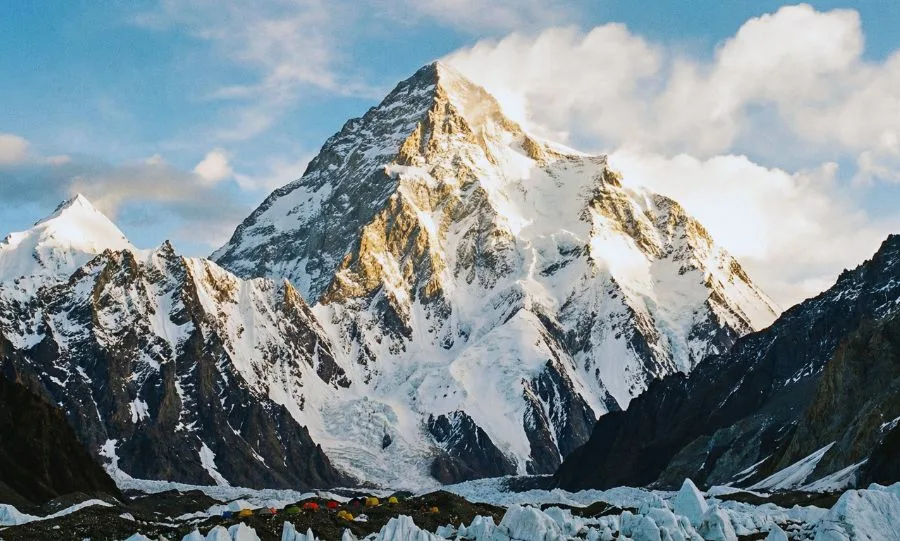
Italian mountaineer and author Fosco Maraini famously described Concordia as “the world’s greatest museum of shape and form” in his book Karakoram—a description that still perfectly captures the grandeur of this extraordinary place.
At Concordia, six peaks rising above 7,925 meters tower into the sky, including K2 (8,611 m), the second-highest mountain in the world. This is one of the most spectacular high-altitude landscapes on Earth.
The journey begins in Islamabad, followed by a flight to Skardu and an overland drive to the trek’s starting point, where we meet our expedition porters—experienced and resilient mountain men of the Karakoram. As the trek progresses, we enter a vast wilderness of rock, ice, and sky, moving deeper into one of the most dramatic mountain regions in the world.
Upon reaching Paiju Camp, at the edge of the Baltoro Glacier, the raw power of nature becomes unmistakable. The sounds of melting ice, shifting rocks, and the deep creaks of the glacier create an unforgettable sensory experience.
Arrival at Concordia is the ultimate reward. Here, trekkers are surrounded by some of the world’s most iconic peaks, including K2, Broad Peak (8,051 m), Gasherbrum IV (7,925 m), and the razor-edged Mitre Peak. There is truly no other place on Earth like Concordia—it is often called the Roof of the World, a place that feels like shaking hands with the heavens.
The K2 Base Camp & Concordia Trek is a challenging and demanding high-altitude trek, designed for trekkers with previous mountain trekking experience. It is not recommended for beginners or those without prior exposure to strenuous trekking at altitude.
Accommodation:
Twin-sharing standard hotel rooms in towns.
2-person dome tents during the trek.
Meals:
Half board at hotels (breakfast + dinner).
Full board during the trek (breakfast, lunch, dinner, tea/coffee).
Transportation:
Air-conditioned transport along the Karakoram Highway.
Soft-top 4×4 jeeps to/from the trek head and trek end.
Camping Facilities:
2-person dome tents with mattresses.
Dining tent with folding table & chairs.
Kitchen tent with full kitchenette and staff.
Toilet tent.
Portage:
13 kg per person during the trek.
Other Services:
Tips and portage at airports & hotels.
Entrance fees to sites and museums.
English-speaking mountain guide.
Domestic or international airfare and airport taxes.
Any expenses due to forced measures, flight cancellations, landslides, natural calamities, acts of God, or other events beyond the control of Rock Valley Tours, their staff, and suppliers.
Personal expenses not mentioned under “Included,” such as souvenirs, snacks, phone/internet charges, or laundry.
Personal trekking equipment and clothing.
Optional activities or services not listed in the itinerary.
Travel or health insurance, including evacuation or rescue costs.
Luggage
Large Duffel Bag: Maximum 12.5 kg, with lock. Easier for porters to carry; avoid using a backpack.
Day Pack: For items you need during trekking, jeep rides, or bus travel (camera, jacket, water bottle, etc.).
Extra Carry-On: To store city clothes in the respective city.
Money Belt/Fanny Pack: For passport, travel documents, and cash.
Sleeping & Camping
Sleeping Bag: Rated 0 °F / -18 °C. Down bags are lightweight; synthetic bags perform better when wet. Waterproof shell or bivy recommended.
Camp Shoes: Jogging shoes or Tiva sandals, ideal for streams and campsite strolls.
Mattress/Close-Cell Matrices: We provide, but personal comfort items are optional.
Footwear
Trekking Boots: Medium-weight, fabric or fabric/leather combination. Well broken-in. Compatible with crampons.
Crampons: Required for certain high-altitude treks (e.g., Gondogoro La, Biafo-Hispar, Wartum Peak).
Thermal Socks: Cotton/wool blend for glaciers; synthetic/cotton for warmer sections.
Liner Socks: Thin, wickable material like polypropylene, Capilene, Thermax, or Drylete.
Clothing
Polyester Fleece/Pile Jacket & Pants: Warm, even when wet.
Rain Gear: A waterproof and windproof suit that fits over fleece layers.
Wicking Long Underwear: Tops and bottoms, two sets recommended.
Down Jacket/Parka: Essential for high-altitude or evening cold.
Shalwar Kameez (Women): Comfortable, loose-fitting for warm conditions and culturally appropriate.
Cotton/Wool Shirts & Trousers: Layering for trekking and evenings.
Gloves/Mittens & Ski Hat: Protect against cold and wind.
Brimmed Sun Hat: Protects from low morning sun.
Personal Gear
Sunglasses: High-quality UV protection.
Water Bottle: Durable screw-top recommended.
Headlamp & Extra Batteries/Bulbs
Sunscreen, Lip Balm, Skin Lotion
Toiletries & Laundry Soap
Swiss Army Knife / Multi-Tool
Nylon Cord / Clothesline
Personal Medical Kit
Pocket Sewing Kit
Lighter or Matches
Wristwatch
Optional Items
Extra sleeping mat for comfort.
Stuff sacks for used clothing.
Travel tissues or toilet paper.
Notebook and pen for journaling.
Snacks (energy bars, dried fruits, candy).
Camera, extra batteries, lenses, and cleaning supplies.
Lightweight sports gear (Frisbee, playing cards).
Water purification tablets.
Bathing suit (for rivers/lakes).
Tips
Pack one large duffel and one small day pack for convenience.
Wear durable, comfortable, and easily washable clothes.
Layer clothing to adjust to varying temperatures: warm days, cold nights.
Men can wear shorts after leaving populated areas; women should stick to loose, long clothing.

