
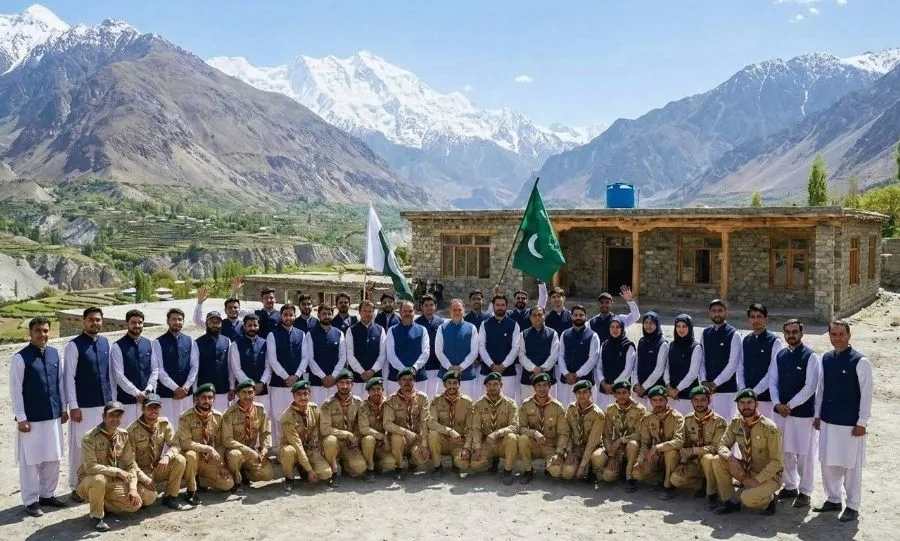
Brothers beyond borders The Ismaili way…
This is a travel product specially designed for the Ismaili community across the world. Whether you reside in India or in the North American continent, this is an opportunity for you to come and experience the Ismaili way of life in the Northern region of Pakistan. The population in this region is largely Ismaili. They have a distinct way of life which is unlike anywhere else in other Pakistani communities. Some of the events that are part of the Ismaili calendar are:
• Navroz – 21st March
It is the advent of the Persian New Year. Even though it is celebrated everywhere, the biggest congregations are at Gulmit, Skardu, and Shimshal. Visitors have the option of going to any of the three destinations. This event is for 1-day and visitors are expected to be here one or two days in advance and also to have one or two days post-event in order to undertake the road trip to Gilgit or to Islamabad, which are the nearest airports. Skardu also has an airport with flights coming in every day. However, this is subject to the clearance of the weather.
• Takht Nashini (Coronation)– 11th February
Takht Nashini or coronation is a 2-3day event celebrated in Hunza and Gojal. You get a chance to celebrate Moulana Hazir Imam’s coronation with locals. You can volunteer during this time to be a cook or help kids prepare programs for the event. Takht nashi ni gives you the true essence of the Ismaili Jamaat or congregation. Since this event takes place in July, one is bound to find this treasure of a region in all its pristine glory. July is perhaps the best time to visit this fairyland.
• First visit of Moulana Hazir Imam – 23rd October
This event is in celebration of Moulana Hazir Imam’s first visit to Hunza in 1960. That was the first time that the people of Hunza saw him in person for the first time. It is a 2-day celebration. This happens in almost every nook and corner of Gilgit-Baltistan, but the biggest congregation is in Karimabad, Hunza. This is coupled with different sporting activities, which have been going on for ages. These include the traditional Tug-of-war, cultural dance, local music, nighttime illumination, and bonfire. Sometimes fireworks are also part of the celebrations. There is a celebration in the air everywhere. The whole village cooks for each and everyone present on the occasion. This is a great event to create harmony between different villages. It is a treat for tourists. Tourists would be lodged in Karimabad or Aliabad for the duration of the celebrations.
• Birthday of Hazir Imam – 12th October
Every Ismaili celebrates Moulana Hazir Imam’s birthday on the 12th of October. This is done with a great deal of zeal and fervor. All the congregation halls, known locally as Jamaatkhanas, prepare for this event. Communal cooking is done for all to benefit from. Since this is in December, which is in the middle of winter, tourists can come to see the area in all its magnificence and glory. The snowcapped mountains add to the experience. This is a one-day event, and it can also be a part of a bigger tour provided it coincides with the dates.
Some of the other happenings in this beautiful land are not bound by time and dates. They can be enjoyed throughout the year. These can be listed as:
• Lifestyle of the Ismailis in Gilgit-Baltistan
Come and visit the Ismaili way of life. Experience life in their homes, eat their cuisine, and join in their customs. This would enable you to experience the Ismaili way of life firsthand. Whether you go on a trek with a local shepherd, help an old lady pick fruit from her garden, or spend time with an artisan from Gilgit-Baltistan, this is going to be a great and humbling experience for you. This is unlike what we encounter in cities. This is an opportunity to come in as a visitor and leave as a friend.
• Visit to Diamond Jubilee Schools in Gilgit-Baltistan
This is a wonderful project that needs to be seen. Under this project, around 100 schools have been established. These are community schools where residents of Gilgit-Baltistan and the school management have made a difference by being involved. Visitors can come and spend a complete day in the schools and see for themselves how these schools have uplifted the literacy in Gilgit-Baltistan. Amongst the new generation, some of the areas have a 100% literacy rate. This is unheard of in Pakistan. Come and spend a day in schools, volunteer to paint the school, embrace the children, and step into the local shoes. This experience is enough to make your eyes moist with tears of joy.
• Broghil Valley, the remotest Ismaili communities
In the Broghil Valley, which is home to possibly the remotest living communities of Ismailis. Come and experience how these people carry perpetual smiles across their faces, despite the hardships that they face in their everyday lives. This entails a trek that commences from Chitral, Khyber Pakhtunkhwa, and takes you down memory lane. You will be in a time that reminds you of how people lived in this area 200 years ago. Nothing has changed here. This is a place that is stuck in time. All the basics of city life are non-existent here. Come and experience warmth coupled with humbleness.
• Baba Ghundi Festival
Come and visit the 4-day International Baba Ghundi Festival. This is a Sufi shrine of the revered saint who was instrumental in the spread of Islam in this region. The local Government included this festival in its annual calendar of events in 2010. It is part of International Tourism Day. A large number of Wakhi-speaking Afghans also participate in the festival. This helps the two communities to come together. Participants from Afghanistan travel on yaks to cross glaciers and mountain peaks for days to reach Hunza. This is possible only during July and September. Traditional games, like Buzkashi and polo, are among the main features of the festival. Wearing local costumes, musicians and dancers perform on the occasion. It is a colorful occasion like no other. The people of Chapursan and Wakhan had been carrying out barter trade for centuries. In summer, Kyrgyz traders from Afghanistan cross the Irshad Pass and exchange yaks, sheep, and goats for shoes, cloth and garments, kitchen utensils, and other products procured from markets in Hunza and Gilgit. The exchange takes place near the Shrine of Baba Gandhi. This is truly a remarkable event. Visitors are expected to reach Hunza 3 days before the festival. They will be escorted in jeeps. The visitors will be put up in camps for the duration of the festival before returning to Hunza.
• Sultan-e-Shah Talib Mausoleum Visit
Hussaini village is one of the oldest settlements of the Wakhi people in the Gojal Valley, Hunza. Hussaini is surrounded by the Hussaini Glacier, the Khunjarav River, and the Karakorum Highway, which passes through the middle of the village. Located in Hussaini, there is a shrine of a decades-old Sufi saint called Sultan-e-Shah Talib. Other major tourist attractions are Borith Lake, Hussaini Suspension Bridge, Zarabod, and the whole village on Attabad Lake. Visitors would be taken to Hussaini on a jeep route or even on a trek. This would be a one-day excursion with visitors expected to reach their hotel/rest house by late evening. If any tourists are looking for a laid-back and not too taxing excursion, this is surely for them. Experience the best of what Hussaini has to offer you.
• Pir Shams Shrine Visit
Another revered Sufi saint to have graced this beautiful region was Pir Shams, who had a brief stopover in Shimshal. To celebrate his visit, the locals have constructed a monument that is visited by many local people throughout the year. A jeep trek takes you to Shimshal via Passu. This entails an overnight stay in Shimshal, where you can enjoy the nature, culture, and customs of the local Ismaili folk from a very close distance. The welcome and warmth that one receives from these people are exemplary. It is because of these local indigenous people and their smiles that Pakistan has been rated the best tourism destination for the year 2020. Welcome, everyone!

