This is a low-budget adventure tour specially designed for young travelers and backpackers who want to explore Pakistan’s greatest mountain regions without spending a fortune.
Throughout the journey, we stay in tourist-class hotels and local guesthouses and travel mainly by public transport, making this trip affordable while still rich in experience.
The tour takes you through the Karakoram, Himalayas, and Hindukush ranges, offering breathtaking landscapes and cultural encounters. Traveling along the legendary Karakoram Highway (KKH), you’ll witness some of the world’s most dramatic mountain scenery and experience the warm hospitality of northern Pakistan.
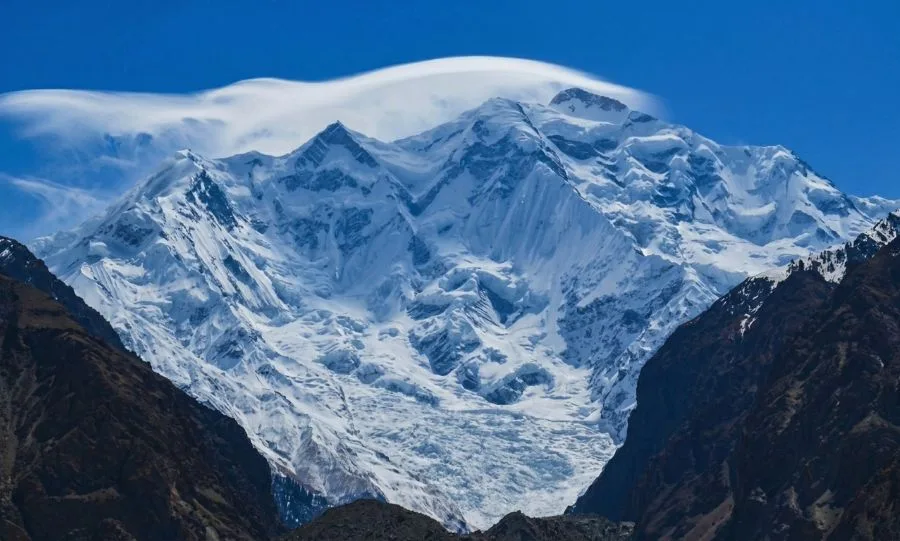
We visit the magical Fairy Meadows and hike to Nanga Parbat Base Camp, often called the “Killer Mountain.” The journey then continues to Gilgit and the Hunza Valley, where we take easy to moderate walks to Diran Peak Base Camp and Rakaposhi Base Camp, surrounded by towering glaciers and alpine scenery.
Later, we travel by jeep and rough mountain roads into the remote Chitral Valley, experiencing a completely different culture and landscape, before descending to Peshawar and returning to Islamabad.
This tour is perfect for travelers who want real adventure, cultural immersion, and iconic base camp hikes all economically and authentically.
Arrive in Islamabad, the federal capital of Pakistan, and transfer to the hotel/guesthouse for rest. In the afternoon, enjoy a city tour of the twin cities of Rawalpindi and Islamabad, including an evening stroll through the lively Raja Bazaar.
Overnight at hotel/guesthouse.
Drive to Taxila, the ancient capital of the Gandhara Buddhist civilization. Visit the ruins of Sirkap, the hilltop monastery of Jaulian, and the Taxila Museum, which houses artifacts including gold and silver coins from the era of Alexander the Great (326 BC).
Continue driving towards the Karakoram Highway (KKH), passing through the lush green valleys of Mansehra. The Karakoram Highway, a joint venture between Pakistan and China, took 20 years to complete and cost the lives of over 900 workers.
Overnight at a motel/guesthouse. (4–5 hrs | 200 km)
Early morning drive to Gilgit, the capital of Gilgit-Baltistan. At Thakot, cross a Chinese-built bridge and enter the Indus River gorge—once part of the ancient Silk Route used by traders and Buddhist monks.
Stop at ancient rock carving sites and have lunch in Chilas. At Thalichi, enjoy spectacular views of Nanga Parbat (8,125m), Rakaposhi (7,788m), and the Haramosh Range.
Witness the meeting point of the Karakoram, Himalaya, and Hindukush ranges where the Gilgit River joins the Indus.
Overnight in Gilgit. (6–7 hrs | 320 km)
Visit the Kargah Buddha, a 7th-century rock carving. Stroll through Gilgit Bazaar before driving along the ancient Silk Route toward Hunza Valley.
En route, stop at the Rakaposhi Viewpoint. Arrive in Karimabad, the cultural heart of Hunza.
Overnight at the hotel. (2–3 hrs | 110 km)
Visit the Kargah Buddha, a 7th-century rock carving. Stroll through Gilgit Bazaar before driving along the ancient Silk Route toward Hunza Valley.
En route, stop at the Rakaposhi Viewpoint. Arrive in Karimabad, the cultural heart of Hunza.
Overnight at the hotel. (2–3 hrs | 110 km)
Drive through Upper Hunza with a stop at Gulmit Village. Walk through terraced fields and visit the Polo Ground and traditional homes.
Short trek to Gulkin Glacier and Borith Lake. Continue to Passu, famous for the Passu Cones, Passu Glacier, and Batura Glacier.
Overnight at the lodge. (2–3 hrs | 50 km)
Morning walk to Passu Glacier and Passu Lake, offering close views of Shispar Peak (7,611m) and Passu Peak (7,478m).
Afternoon visit to the iconic suspension bridges over the Hunza River.
Overnight in Passu. (4–5 hrs | 110 km)
Drive along the Karakoram Highway to Minapin Village, located beneath Rakaposhi and Diran Peak.
Begin a moderate trek to Tagafuri, passing juniper forests, wild rose bushes, and summer settlements. Continue through alpine pastures to the campsite between Diran Glacier and Rakaposhi Ridge.
Overnight at camp. (Long day: 11–12 hrs)
Descend from Tagafuri back to Minapin Village.
Overnight camping.
Drive to Raikot Bridge and continue by jeep through a narrow gorge to Tattu Village. From here, trek to Fairy Meadows, one of the most scenic alpine meadows in the world, located at the foot of Nanga Parbat (8,125m).
Overnight in wooden huts. (5–6 hrs | 120 km)
Optional full-day trek to Nanga Parbat Base Camp, crossing the glacier. Pack lunch provided. Return to Fairy Meadows.
Overnight in wooden huts.
Trek back to Tattu Village, then drive via Raikot Bridge and KKH to Gilgit. Evening free.
Overnight at hotel/guesthouse.
Jeep to Phander Valley, gradually entering the Hindukush Range. Enjoy occasional short walks along the route through wild and remote landscapes.
Overnight at hotel/guesthouse.
Drive towards Shandur Pass (3,700m), home to the world’s highest polo ground. Short walk over the pass before continuing to Mastuj.
Overnight at hotel/guesthouse.
Drive along the Chitral River through the arid landscapes of the Hindukush. Lunch stop at a local village.
Overnight in Chitral.
Day trek across a ridge separating Bumburet and Birir Valleys. Experience the unique culture and daily life of the Kalash people. Return to Chitral.
Overnight at hotel/guesthouse.
Drive via Lowari Pass (3,200m) with dramatic hairpin turns. Descend to Dir, Chakdara, and Malakand Pass, arriving in the Swat Valley.
Overnight at hotel/guesthouse.
Full-day sightseeing in Upper Swat, visiting Malam Jabba, Kalam, the Swat Museum, White Palace, and Buddhist rock carvings.
Overnight in Mingora.
Drive to Peshawar, visiting Qissa Khwani Bazaar, Mahabat Khan Mosque, Caravanserai, and Peshawar Museum.
Overnight at hotel/guesthouse.
Morning excursion to the historic Khyber Pass. Optional visit to Michni Post for views of the Pak-Afghan border.
Overnight in Peshawar.
Drive to Islamabad via the Grand Trunk Road, crossing the Indus River at Attock. Photo stop at the confluence of the Indus and Kabul Rivers.
Afternoon city tour of Islamabad. Overnight at hotel/guesthouse.
Transfer to the airport for your onward flight home.
Do not hesitage to give us a call. We are an expert team and we are happy to talk to you.
+92 347 4598096
info@rockvalleytours.com
Accommodation:
Twin-sharing standard hotel rooms in towns.
2-person dome tents during the trek.
Meals:
Half board at hotels (breakfast + dinner).
Full board during the trek (breakfast, lunch, dinner, tea/coffee).
Transportation:
Air-conditioned transport along the Karakoram Highway.
Soft-top 4×4 jeeps to/from the trek head and trek end.
Camping Facilities:
2-person dome tents with mattresses.
Dining tent with folding table & chairs.
Kitchen tent with full kitchenette and staff.
Toilet tent.
Portage:
13 kg per person during the trek.
Other Services:
Tips and portage at airports & hotels.
Entrance fees to sites and museums.
English-speaking mountain guide.
Domestic or international airfare and airport taxes.
Any expenses due to forced measures, flight cancellations, landslides, natural calamities, acts of God, or other events beyond the control of Rock Valley Tours, their staff, and suppliers.
Personal expenses not mentioned under “Included,” such as souvenirs, snacks, phone/internet charges, or laundry.
Personal trekking equipment and clothing.
Optional activities or services not listed in the itinerary.
Travel or health insurance, including evacuation or rescue costs.
Luggage
Large Duffel Bag: Maximum 12.5 kg, with lock. Easier for porters to carry; avoid using a backpack.
Day Pack: For items you need during trekking, jeep rides, or bus travel (camera, jacket, water bottle, etc.).
Extra Carry-On: To store city clothes in the respective city.
Money Belt/Fanny Pack: For passport, travel documents, and cash.
Sleeping & Camping
Sleeping Bag: Rated 0 °F / -18 °C. Down bags are lightweight; synthetic bags perform better when wet. Waterproof shell or bivy recommended.
Camp Shoes: Jogging shoes or Tiva sandals, ideal for streams and campsite strolls.
Mattress/Close-Cell Matrices: We provide, but personal comfort items are optional.
Footwear
Trekking Boots: Medium-weight, fabric or fabric/leather combination. Well broken-in. Compatible with crampons.
Crampons: Required for certain high-altitude treks (e.g., Gondogoro La, Biafo-Hispar, Wartum Peak).
Thermal Socks: Cotton/wool blend for glaciers; synthetic/cotton for warmer sections.
Liner Socks: Thin, wickable material like polypropylene, Capilene, Thermax, or Drylete.
Clothing
Polyester Fleece/Pile Jacket & Pants: Warm, even when wet.
Rain Gear: A waterproof and windproof suit that fits over fleece layers.
Wicking Long Underwear: Tops and bottoms, two sets recommended.
Down Jacket/Parka: Essential for high-altitude or evening cold.
Shalwar Kameez (Women): Comfortable, loose-fitting for warm conditions and culturally appropriate.
Cotton/Wool Shirts & Trousers: Layering for trekking and evenings.
Gloves/Mittens & Ski Hat: Protect against cold and wind.
Brimmed Sun Hat: Protects from low morning sun.
Personal Gear
Sunglasses: High-quality UV protection.
Water Bottle: Durable screw-top recommended.
Headlamp & Extra Batteries/Bulbs
Sunscreen, Lip Balm, Skin Lotion
Toiletries & Laundry Soap
Swiss Army Knife / Multi-Tool
Nylon Cord / Clothesline
Personal Medical Kit
Pocket Sewing Kit
Lighter or Matches
Wristwatch
Optional Items
Extra sleeping mat for comfort.
Stuff sacks for used clothing.
Travel tissues or toilet paper.
Notebook and pen for journaling.
Snacks (energy bars, dried fruits, candy).
Camera, extra batteries, lenses, and cleaning supplies.
Lightweight sports gear (Frisbee, playing cards).
Water purification tablets.
Bathing suit (for rivers/lakes).
Tips
Pack one large duffel and one small day pack for convenience.
Wear durable, comfortable, and easily washable clothes.
Layer clothing to adjust to varying temperatures: warm days, cold nights.
Men can wear shorts after leaving populated areas; women should stick to loose, long clothing.
If you’re traveling to Pakistan, you’ll need a visa. Depending on your nationality, you can get it on arrival or apply online before your trip. You can also go to your local Pakistani embassy for a tourist visa. The length of stay varies: e-visas can be up to 3 months (extendable to 6 months), while visas on arrival are valid for 30 days. Make sure to check visa requirements with the authorities, as they might change.
In Pakistan, what you wear depends on when and where you’re going. In hot areas, wear light, loose clothes like a shirt and trousers. For cold places, bring warm clothes like a jacket and layers. When visiting mosques, cover your head, arms, legs, and shoulders. Dress modestly and avoid shorts. If you’re unsure, it’s best to dress conservatively.
June–September: Monsoon season with unpredictable rains, reaching over 45°C (113°F) in June. Floods can occur.
October/November: Post-monsoon season with decreasing temperatures and rainfall. Days are warm, nights cool.
December–February: Winter months with pleasant daytime temperatures around 20°C (68°F) and colder nights, especially in the northern mountains where it snows.
March–May: Hot and dry season with temperatures in the mid-30s°C (95°F) in low-lying areas, getting hotter towards the north.
Although Pakistan has faced challenges in recent years, it’s now generally safe to visit as long as you stay in busy areas. Some people might worry about coming here, but trust us, there’s a lot to discover beyond what you see in the news. You can be confident that Rock Valley Tours wouldn’t take you anywhere unsafe.
